Not slides —
the operators' screens.
Real sessions, a shared account router, live context meters. This is the desk the loop actually runs on — terminals and gates, not mockups.
Adopting AI is easy. The hard part is the standard, the verification, the accountability — and the loop that keeps improving itself.
Four loops run in parallel,
one harness verifies them all.
Development, design, planning and QA each iterate in their own loop. Every artifact must clear policy, quality and approval gates before it reaches a human.
Only what clears the gates
ever reaches a person.
Failure isn't a stop — it's the next iteration's input
We don't ban AI.
We divide by risk.
Personal data, customer data, security, legal, external transfer. Execution is blocked on violation.
Document tone, customer principles, AI usage logging, approval bars. Enforced or audited regularly.
Per-team rules across development, QA, operations, and support — reflecting how each team works.
Personal prompts, notes, automation routines, shortcuts. Encouraged, and the best ones are shared.
Impact scales with
your engineering org.
We measure a baseline first, then confirm the target. Below is a reference at a 5% annual productivity gain — actual numbers are set after the diagnosis.
From what's verifiable,
stage by stage.
Diagnose
Map usage and problems across teams, QA and individuals; draft the governance design.
Standardize
Document company standards, team rules, approval and security principles.
Verify
Build the automation loop and verification bar in one area, then measure the result.
Scale
Roll the proven pattern across the org, with owners and weekly reporting.
One brief,
six studies.
The same operating system, taken in different tempers before this one. The wall keeps turning — rest a cursor on it to pause, drag to wander.
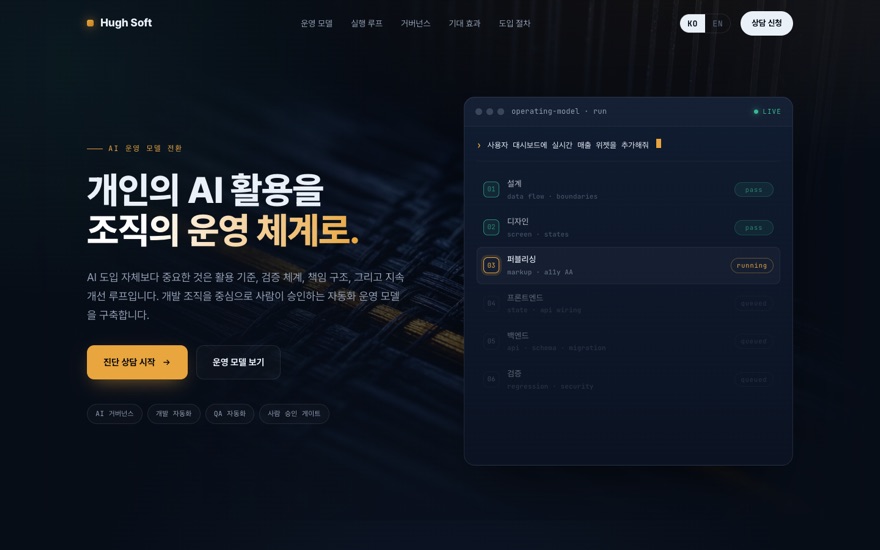 01Live OpsConcept A
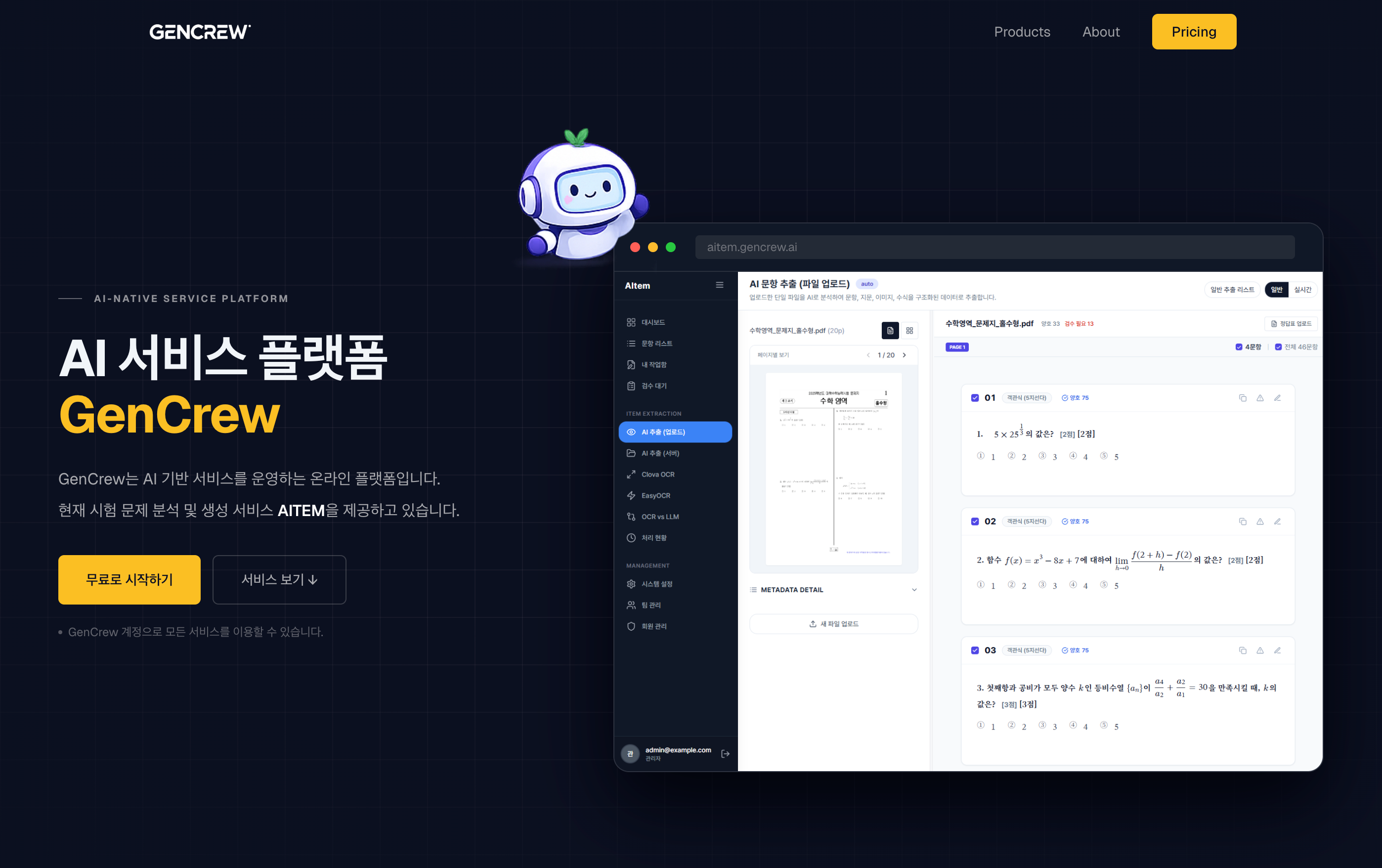 02The SealConcept B
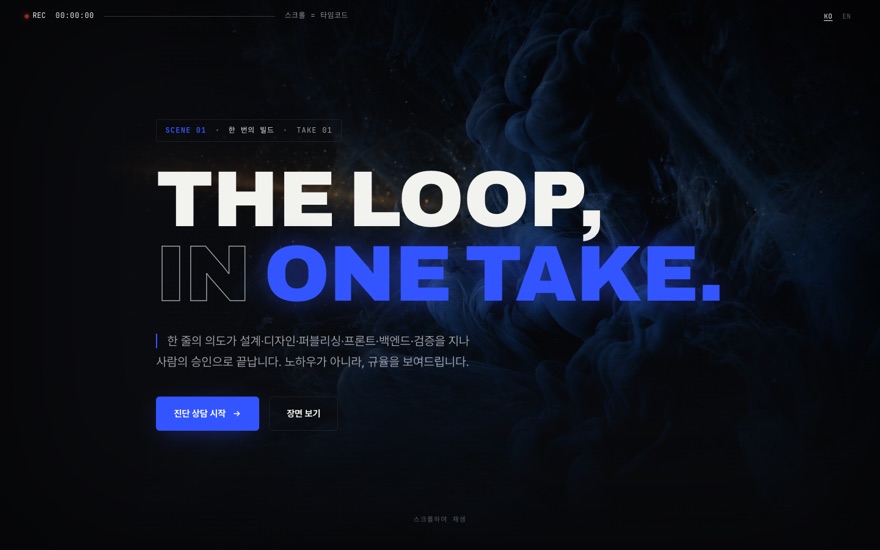 03The FilmConcept C
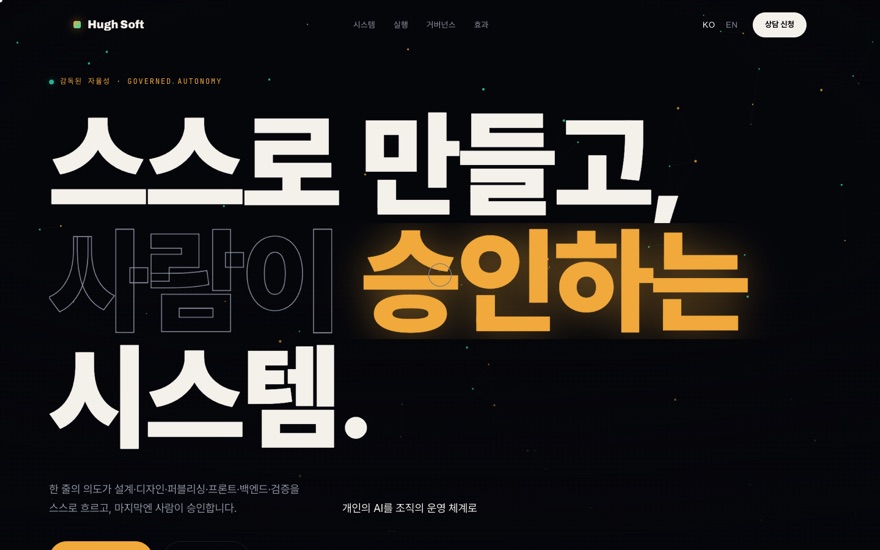 04Motion FlagshipConcept D
 05Bloom EditorialConcept F
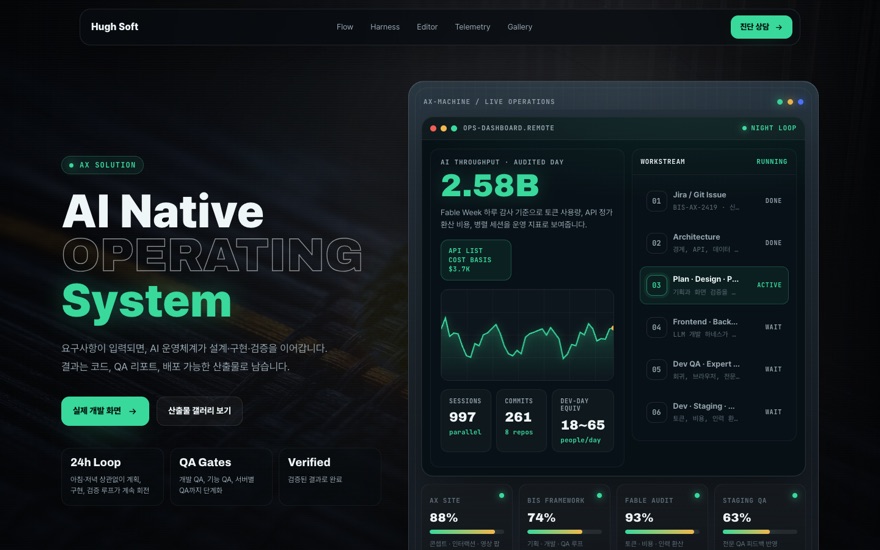 06Live CockpitConcept I
Let's build
the standard.
The next meeting is about scope and data boundaries, not picking a solution. Sixty to ninety minutes is enough.
Book a diagnosis call